

WiFi at Events: Why the Venue Network Isn’t Enough
A practical guide to why venue WiFi fails at events, the specific failure modes, and the playbook event producers running

Hawaii hosts events across four very different islands, and connectivity behaves differently on each of them. A convention at the Hawaii Convention Center in Honolulu, an incentive dinner on a Wailea lawn in Maui, a race village in Kailua-Kona, a wedding on Kauai’s North Shore — every one of these sits at a different distance from fiber and cellular capacity. WiFiT delivers bonded cellular and satellite-hybrid Hawaii event WiFi across Oahu, Maui, the Big Island, and Kauai, built for salt air, resort-network congestion, and venues where the nearest circuit is an island away.
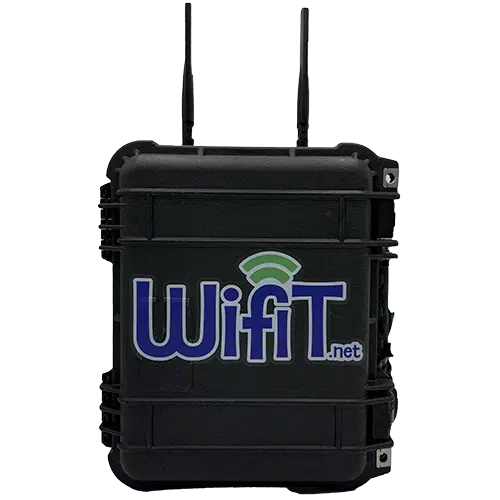
Ideal for trade shows, check-in / registration desks, POS systems, meetings, and conference breakout rooms.

Ideal for site offices, trade shows, conferences, silent auctions, guest networks, and live streaming.

Ideal for any location with an unobstructed sky view or remote locations with limited cellular signal.

Ideal for trade shows, large conventions, outdoor events & big venue spaces, festivals, and popup locations that need custom solutions.








Hawaii event programs rarely stay in one place. A single corporate group might open with a general session at the Hawaii Convention Center in Honolulu, move to a beach activation at Ko Olina on Oahu’s leeward coast, and close with an awards dinner at a Kaanapali resort on Maui two days later. Venue WiFi can’t follow that itinerary — each property runs its own network, its own guest-access system, and its own definition of “high-speed.” WiFiT deploys independent bonded cellular and satellite-hybrid networks that travel with the event, island to island, so the production team works on the same infrastructure at every stop.
The islands compress an unusual range of RF environments into a small state. Downtown Honolulu and Waikiki have dense carrier coverage that saturates fast when a citywide event lands. Resort corridors on Maui and the Kona-Kohala coast of the Big Island sit on capable but limited cell sites engineered for hotel occupancy, not a 2,000-person conference buyout. And large stretches of Kauai, East Maui, and the Big Island’s southern districts have thin coverage or none. Undersea fiber connects the islands, but the last miles from that backbone to an actual event lawn are where connectivity plans fall apart. Bonded multi-carrier cellular handles the populated corridors; satellite fills in everywhere else; most Hawaii deployments end up using both.
Oahu carries most of the state’s large-format events. The Hawaii Convention Center on Kalakaua Avenue hosts national association meetings, medical congresses, and trade expos drawing attendees from across the Pacific Rim, and exhibitors there face the same math as at any mainland hall: dedicated drops priced per booth, per show, with per-device attendee WiFi on top. A self-contained bonded cellular kit shipped to the booth sidesteps the queue at the venue services desk entirely. Beyond the convention center, Oahu’s event calendar runs deep — the Honolulu Marathon each December with its finish-line operations at Kapiolani Park, the Sony Open in Hawaii at Waialae Country Club, festivals across Ala Moana and Kakaako, and military and government functions around Pearl Harbor that need segmented, secured networks.
Waikiki’s resort towers — Hilton Hawaiian Village, Sheraton Waikiki, the Royal Hawaiian and their neighbors — host a constant rotation of corporate meetings and incentive programs. Resort conference WiFi in Waikiki suffers from a specific failure mode: the network is shared with a full house of leisure guests streaming in their rooms, and ballroom access points sit behind the same congested backhaul. When a general session needs guaranteed bandwidth for presenters, remote speakers, and a few hundred connected attendees, a dedicated WiFiT network with its own bonded uplinks keeps the program independent of whatever the hotel network is doing that hour. The same applies at Ko Olina and Turtle Bay, where oceanfront lawns and luau grounds sit at the edge of the property’s coverage.
Maui is the state’s incentive-travel heavyweight. Wailea’s resort row and the Kaanapali beach corridor host board retreats, product launches, and multi-property conference buyouts nearly year-round. Maui event WiFi has a distance problem: the spectacular outdoor venues that sell these programs — oceanfront lawns, upcountry ranches in Makawao and Kula, plantation estates along the Hana side — are exactly the spots where resort networks and cellular capacity thin out. WiFiT stages bonded cellular kits with high-gain antennas for the resort corridors and satellite-hybrid rigs for upcountry and remote east Maui sites, so a planner can put the welcome reception wherever the view is best and let the network follow.
The Island of Hawaii operates at a different scale — two hundred miles of coastline, lava-field terrain that blocks line of sight, and long distances between cell sites outside Kailua-Kona and Hilo. The Kona-Kohala resort corridor, anchored by Waikoloa Beach Resort and the Mauna Lani and Mauna Kea properties, hosts major conferences and sports events, including the endurance-racing traffic that floods Kailua-Kona every fall and pushes local networks to their limits. On the Hilo side, the Merrie Monarch Festival fills the town each spring. Big Island event internet almost always means hybrid architecture: bonded cellular where the corridor has capacity, satellite where lava fields and distance rule it out, and enough antenna work to deal with terrain that absorbs RF like a sponge.
Kauai concentrates high-end weddings, retreats, and film-production work into an island where much of the coastline has marginal cellular service. Poipu and Lihue on the south side are well covered; Princeville and Hanalei on the North Shore are hit-and-miss; and the Napali coast side is effectively off-grid. Kauai event WiFi is where satellite earns its keep — a low-earth-orbit terminal paired with cellular bonding turns a Hanalei estate wedding or a North Shore production basecamp into a connected site the same afternoon the kit arrives, with the two paths backing each other up when tropical weather moves through.
Hawaii’s marquee venues are outdoors, and the environment works against electronics. Salt-laden onshore wind corrodes connectors, afternoon rain bands sweep through with little warning, and beach sites offer no structure to mount an access point on. WiFiT’s outdoor kits run in sealed, weather-rated cases with battery power for sites without electrical service, and deployments are engineered for the conditions — antenna placement that survives tradewind gusts, hardware staged out of spray range, and satellite terminals aimed with rain-fade margin in mind. Golf tournaments, beach festivals, canoe-race finishes, and oceanfront brand activations all run on gear that was specced for this climate rather than borrowed from an indoor rack.
Hawaii is one of the largest destination-wedding markets in the country, and the connectivity ask has grown with it: livestreams for guests who couldn’t make the trip, photographers and planners coordinating in real time, payment terminals for vendors, and DJs running cloud-based rigs. Wedding venues here are chosen for scenery, not signal — a clifftop on Kauai, a beach estate on Oahu’s North Shore, an upcountry Maui ranch. A compact WiFiT kit gives the couple a private network for the day, sized for a livestream uplink and a guest count, without depending on a venue router at the edge of its range.
Larger Hawaii programs need more than raw bandwidth. WiFiT deployments segment traffic into separate networks for attendees, exhibitors, registration, and production, with uplink prioritization protecting the loads that can’t hiccup — payment processing, badge scanning, broadcast encoders. For hybrid events beaming a Honolulu general session to mainland offices five or six time zones ahead, the uplink is the product: bonded links across multiple carriers keep the stream alive even when a single carrier’s local cell degrades mid-session. WPA2/WPA3-secured private SSIDs, client isolation, and firewalled segments come standard, which matters for the government, military, and healthcare meetings that route through Honolulu.
Logistics decide Hawaii events, and connectivity is a logistics problem here more than anywhere else on our coverage map. WiFiT ships pre-configured kits to any island with time to spare, supports them remotely through the event, and scales from a single-router wedding package to a multi-zone conference network with an on-site engineer. Since 2015 we’ve built temporary networks for hundreds of large indoor and outdoor events, and the island playbook — carrier diversity on the populated corridors, satellite everywhere else, hardware sealed against salt and rain — comes from that fieldwork. Whether the program lands at the Hawaii Convention Center, a Wailea lawn, a Waikoloa fairway, or a Hanalei bluff, the network shows up in a case and works the same way it did at the site survey.
WiFiT delivers dedicated temporary internet to Hawaii events of every scale — from association meetings at the Hawaii Convention Center in Honolulu to resort conferences in Waikiki, Wailea, and Waikoloa to estate weddings on Kauai’s North Shore. Island geography demands more from event connectivity than a mainland ballroom does: inter-island logistics, resort backhaul congestion, lava-terrain RF shadows on the Big Island, and long coastal stretches of Maui and Kauai with thin cellular coverage. Our bonded multi-carrier cellular kits and satellite-hybrid rigs are packed for exactly that — sealed against salt air, battery-powered for beach sites, and shipped pre-configured to Oahu, Maui, the Big Island, or Kauai so setup takes hours, not truck rolls. Attendee WiFi, exhibitor drops, registration networks, payment processing, and livestream uplinks each get their own protected segment.
We serve all four major islands. On Oahu that means Honolulu, Waikiki, Ko Olina, Kapolei, the North Shore, and windward venues in Kailua and Kaneohe. On Maui: Wailea, Kaanapali, Lahaina, Kihei, upcountry sites in Makawao and Kula, and east-side venues toward Hana. On the Big Island: Kailua-Kona, the Waikoloa and Kohala resort corridor, and Hilo. On Kauai: Poipu, Lihue, Princeville, and Hanalei. Remote sites with little or no cellular coverage are handled with satellite-hybrid kits.
Yes. Exhibitors and event organizers at the Hawaii Convention Center use our self-contained bonded cellular kits as an alternative to per-booth wired drops and per-device attendee WiFi ordered through venue services. The kit ships to your booth or show office pre-configured — power it on and your team is online on a private network you control, at a flat rental price you knew before the show.
Constantly. Waikiki resort ballrooms share backhaul with a full house of leisure guests, so conference sessions compete with in-room streaming for the same bandwidth. We stand up a dedicated network with its own bonded cellular uplinks for the general session, breakouts, and registration, so your program is independent of the hotel network entirely. We work regularly at properties across the Hilton Hawaiian Village-to-Sheraton corridor and at Ko Olina and Turtle Bay.
Yes — Maui incentive programs are one of our most common Hawaii deployments. Resort-corridor events in Wailea and Kaanapali run on bonded multi-carrier cellular; oceanfront lawns, upcountry ranches, and east Maui estates typically get a satellite-hybrid kit because that’s where resort and cellular coverage thin out. If your program moves between properties over several days, the same network infrastructure travels with it.
We do. The Kona-Kohala resort corridor — Waikoloa Beach Resort, Mauna Lani, Mauna Kea — hosts conferences and sports events that overwhelm local cell capacity at peak, and the island’s lava terrain creates RF shadows that surprise mainland planners. We deploy bonded cellular with high-gain antennas along the corridor and satellite-hybrid rigs for remote sites in Ka’u, Puna, or along the Hamakua coast. Hilo-side events, including festival-week programs, are covered as well.
Yes. South-side venues around Poipu and Lihue have workable cellular coverage and run well on bonded kits. North Shore sites in Princeville and Hanalei are where satellite matters — we pair a low-earth-orbit terminal with cellular bonding so weddings, retreats, and production shoots stay connected even where phones barely do. Off-grid estates without power get battery-supported kits.
Endurance events are a strong fit for temporary networks: timing systems, finish-line operations, media compounds, and merchandise sales all need connectivity at sites that were a beach or a parking lot the week before. We build segmented networks for race operations and vendor payment processing, with satellite backup for aid stations and turnaround points outside dense coverage.
Salt-laden wind corrodes unprotected connectors, and afternoon rain bands can arrive with little warning, so we run outdoor deployments in sealed, weather-rated cases with hardware staged out of spray range. Satellite terminals are aimed with rain-fade margin, and bonded cellular gives the network a second path when weather degrades one link. Our kits are specced for this climate — it’s one of the main reasons Hawaii planners rent rather than ship their own office gear over.
Yes. Satellite-hybrid kits — a low-earth-orbit satellite terminal bonded with multi-carrier cellular — are the default recommendation for remote Hawaii venues: Kauai’s North Shore, east Maui, the Big Island’s rural districts, and any beach or valley site without reliable coverage. The satellite and cellular paths back each other up automatically.
A typical 500-person conference deployment bonds multiple 5G/LTE links across different carriers, delivering aggregate bandwidth sized for simultaneous attendee WiFi, registration, and a livestream uplink, with uplink prioritization protecting the loads that can’t stall. Exact throughput depends on the island and site — we run a coverage assessment for your specific venue before quoting, and add satellite capacity where cellular alone won’t carry the load.
Pricing is a flat rental rate based on kit type, bandwidth needs, event duration, and whether an on-site engineer is included — not per device or per attendee. Inter-island shipping is factored in up front, so there are no venue-style surprise line items. Multi-day and multi-island programs are quoted as a single package.
Yes. Segmentation is standard on larger deployments: attendees, exhibitors, registration, and production each get their own SSID and firewalled segment, with bandwidth allocation and uplink priority set per segment. Payment terminals and broadcast encoders ride protected lanes that attendee traffic can’t crowd out.
Yes — hybrid events are a large share of our Hawaii work, since a Honolulu morning session lands mid-afternoon on the US East Coast and remote attendance runs high. Bonded uplinks across multiple carriers (plus satellite where warranted) keep the encoder fed even if a single carrier’s cell degrades mid-stream. We support broadcast-grade encoders, webinar rigs, and wedding livestreams alike.
More than for mainland events — inter-island shipping is the pacing item. Two to three weeks of lead time is comfortable for most deployments; large multi-zone conference networks or peak-season dates (December holidays, spring festival weeks, fall race season in Kona) deserve more. Shorter-notice deployments are often still possible, so ask before assuming it’s too late.
Yes. Incentive and conference programs that open on Oahu and close on Maui or the Big Island are common, and we plan the network as one program: identical pre-configured kits at each stop, the same SSIDs and segmentation throughout, and logistics timed so the network is live before your advance team lands on the next island.
Yes — weddings are a major part of our Hawaii calendar. A compact kit gives the couple a private network sized for a guest livestream, the photographer’s uploads, the planner’s coordination, and vendor payment terminals, at venues chosen for scenery rather than signal: clifftop estates on Kauai, beachfront lawns on Oahu’s North Shore, upcountry Maui ranches. Battery-powered kits cover sites without electrical service.
Yes. Production basecamps on Kauai, windward Oahu, and the Big Island use our satellite-hybrid kits for dailies uploads, remote review sessions, and crew connectivity at locations chosen precisely because they look untouched — which usually means untouched by cell towers too. Kits run on battery or generator power and hold up in wet, salty conditions.
Resort corridors are crowded RF environments — hotel access points, guest hotspots, and neighboring properties all compete for the same channels. We survey the spectrum at setup, place access points and antennas to work around the congestion, and use channel plans that coexist with the resort’s network instead of fighting it. The bonded uplink side is carrier-diverse, so one saturated cell doesn’t take the event down.
Yes. Campus events at UH Manoa, government and military functions around Pearl Harbor and downtown Honolulu, and healthcare meetings routing through the city all deploy on segmented, secured networks — private SSIDs, WPA2/WPA3, client isolation, and firewalled segments per group. We accommodate the compliance and security-review requirements these events carry.
Every deployment includes private SSIDs with WPA2/WPA3 encryption, client isolation, and network segmentation. Larger events add firewalled per-group segments, hidden production SSIDs, and bandwidth controls. Because the network is temporary and dedicated to your event, there’s no shared-venue infrastructure or leftover guest-access system to inherit risk from.
Yes. Battery-supported kits run beach ceremonies, sandbar activations, and remote-lawn receptions without a generator, and sealed cases keep sand and spray out of the electronics. For longer outdoor programs we combine battery banks with quiet generator power staged away from guests.
Both happen. Some resorts and venues welcome a supplemental network for the event’s production and registration loads while their house WiFi keeps serving casual attendee traffic; other events replace venue connectivity outright, especially where the house network can’t offer guarantees. We’ll coordinate with venue IT either way — and where the venue has no network at all, that conversation is short.
Yes, with satellite-hybrid kits. These are the parts of Hawaii where cellular coverage is thin to nonexistent, and they’re also where some of the most sought-after wedding, retreat, and production venues sit. A satellite terminal with cellular bonding where any signal exists gets these sites online the day the kit arrives.
Yes — Hawaii businesses use WiFiT for temporary office internet during moves, renovations, or while waiting on a permanent ISP install, not just for events. We bring bonded-cellular or satellite kits on-site and have you online same-day, no cabling or long-term contract required. See temporary office internet rental for pricing and setup details. Some Hawaii clients just call it temporary office WiFi — same setup, same fast turnaround.
“Hilo fills up completely that week and local networks feel it. Our vendor booths and ticket scanners ran off the rental unit and stayed up through two days of rain.”
“Beaming a Honolulu general session to offices six time zones ahead is unforgiving — nobody is awake to troubleshoot. The bonded uplink held a clean encoder feed for two hours straight.”
“Ko Olina brand activation with four POS stations on sand. Zero declined-transaction drama all day, which is not something I can say about the last two beach events we ran.”
From the field
A practical guide to why venue WiFi fails at events, the specific failure modes, and the playbook event producers running

Livestream-by-default, hybrid event SSIDs, MSP-led event delivery, satellite as standard redundancy — eight trends reshaping event connectivity heading into 2026.

Discover how Fusion-2, with its unlimited data and easy setup, is the ideal portable WiFi solution for trade show attendees
We offer comprehensive WiFi solutions that can meet all of your needs. Rent now and enjoy seamless connectivity from anywhere!